[CA] Computer Abstractions and Technology
- [CA] Computer Abstractions and Technology
✦ 컴퓨터 혁명
- 컴퓨터 기술의 발전
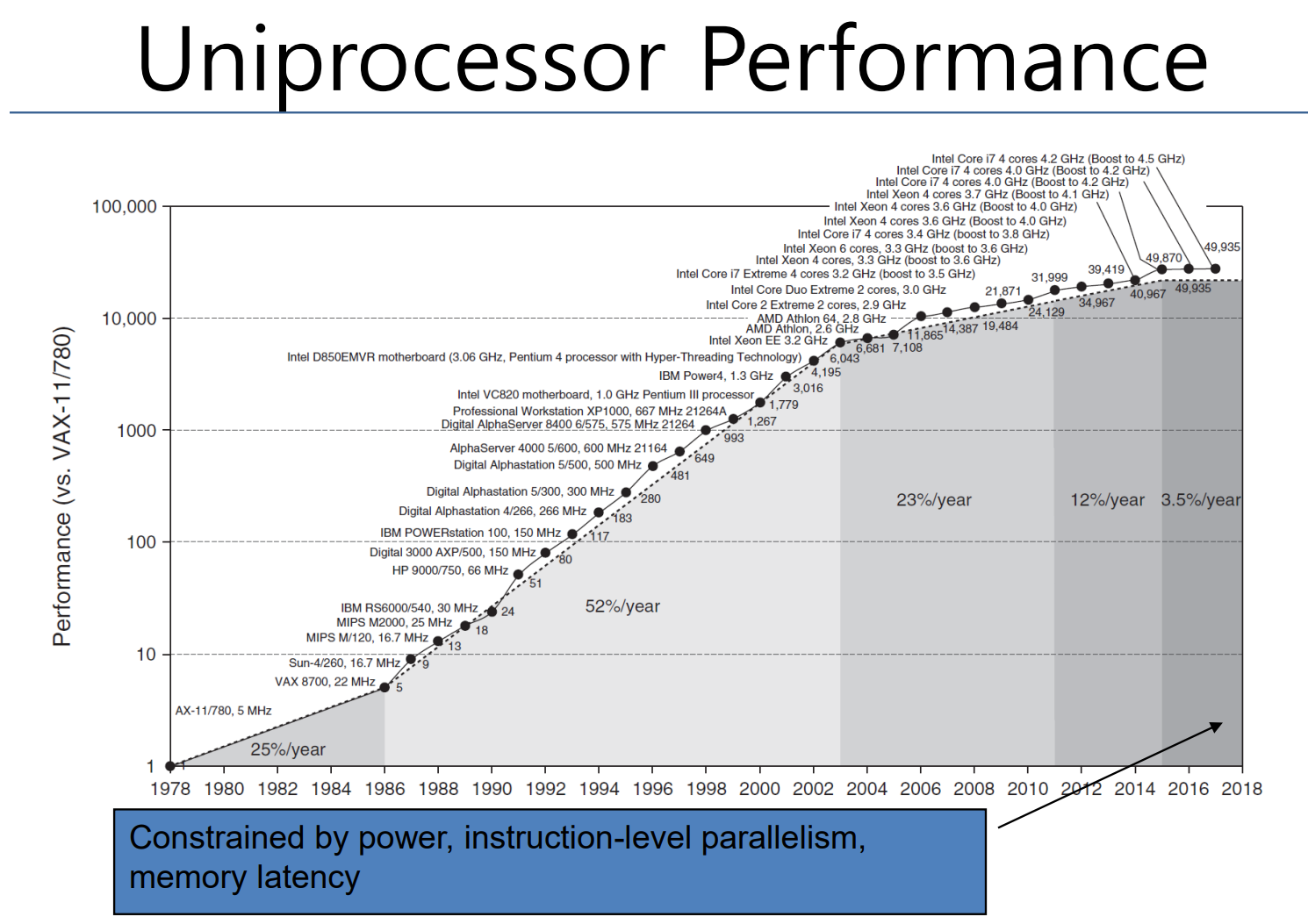
- Moore’s law (무어의 법칙) 이 뒷받침 → 성능의 상승 : not linearly, but exponentially
- 새로운 App 을 가능하게
- Mobile Computing : 휴대전화
- Bioengineering : 인간 게놈 프로젝트
- Data Mining : World Wide Web (WWW), 검색 엔진
- Maching Learning, Deep Learning 등
- 컴퓨터는 만연하다
◆ Computer 의 종류
- Desktop Computer
- 일반적 목적, 다양한 소프트웨어
- 비용 ↔ 성능 절충 관계
- Server Computer
- 네트워크 기반
- 높은 용량, 성능, 신뢰성
- 작은 서버 ~ 건물 크기까지
- Embedded computers
- 밖에선 안에 컴퓨터 기술 있는지 모름
- 최소 성능, 가격 & 전력 소모 최소화
◆ Post PC Era
- Personal Mobile Device (PMD)
- 배터리로 동작
- 무선으로 인터넷 연결
- 수백 달러 ex) 스마트폰, 태블릿, 전자 안경 등.
- Cloud Computing
- Warehouse Scale Computers (WSC)
- Software as a Service (SaaS) ex) Amazon, Google
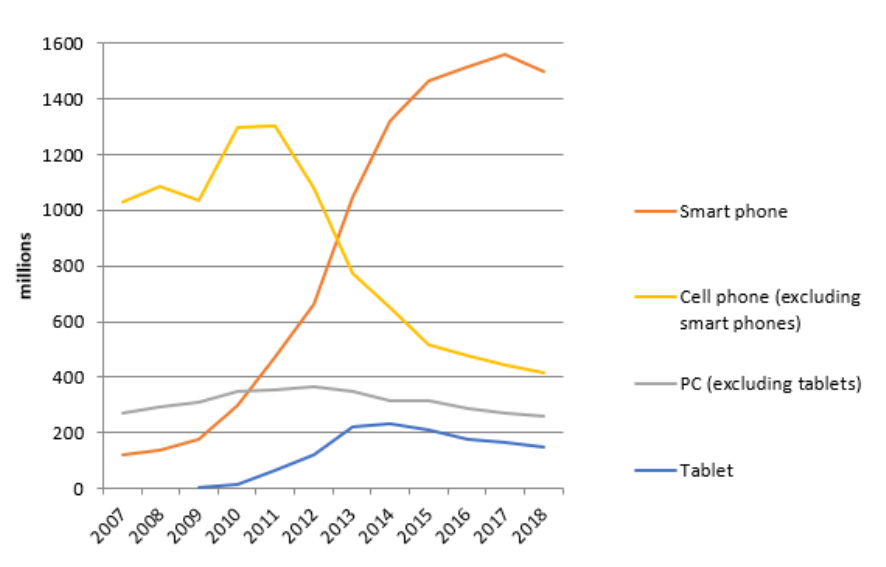
→ 최근의 Smart Phone 과 PC 생산량 비교
✦ Program 밑의 세계
◆ Program 실행 구조
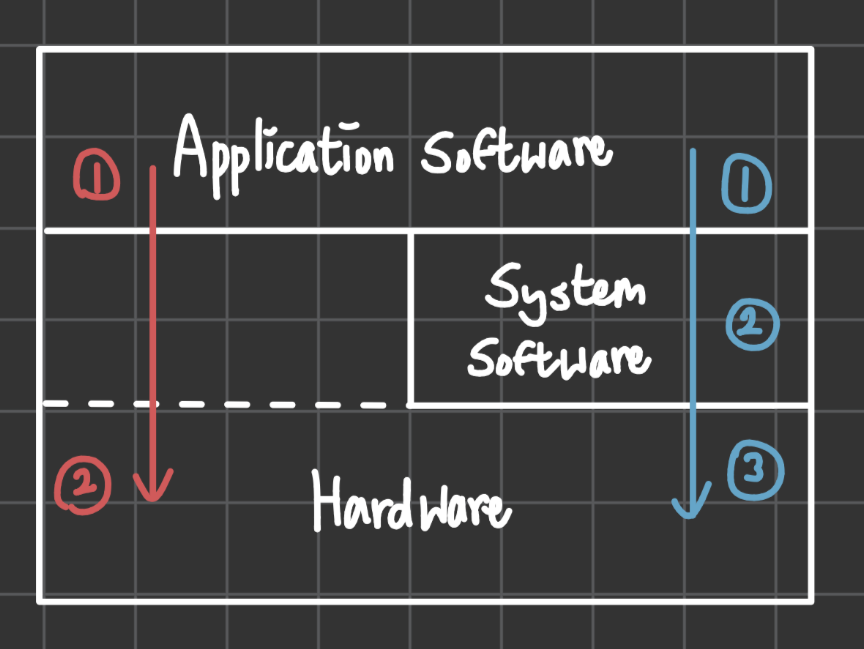
- Application Software : 고급 언어로 쓰임
- System Software
- Compiler : 고급 언어 → 기계어로 번역
- OS : 운영 체제
- Hardware : Processor (CPU), memory, I/O controller → 만약 Application Software 내부적으로 기계어로 컴파일이 가능하다면 System Software 거치지 않아도 됨.
◆ Program Code 의 레벨
- 고급 언어 (High-level language) ex) C
Swap(int v[], int k)
{
  int temp;
  temp = v[k];
  v[k] = v[k+1];
  v[k+1] = temp;
}
- Assembly language : instruction 의 텍스트화
swap:
  muli $2, $5, 4
  add  $2, $4, $2
  lw   $15, 0($2)
  lw   $16, 4($2)
  sw   $16, 0($2)
  sw   $15, 4($2)
  jr   $31
- Hardware representation
- 0, 1 로 구성
- 1줄 당 Assembly language 한 줄에 해당 (32 bit)
0000000010100001000000000011000
00000000000110000001100000100001
10001100011000010000000000000000
10001100111000100000000000000100
10101100011000010000000000000000
10101100111000100000000000000100
00000011111000000000000000001000
✦ 컴퓨터의 구조
◆ 컴퓨터 구성 요소
- 대부분의 컴퓨터에서 동일한 구성 요소 : Desktop, Server, Embedded
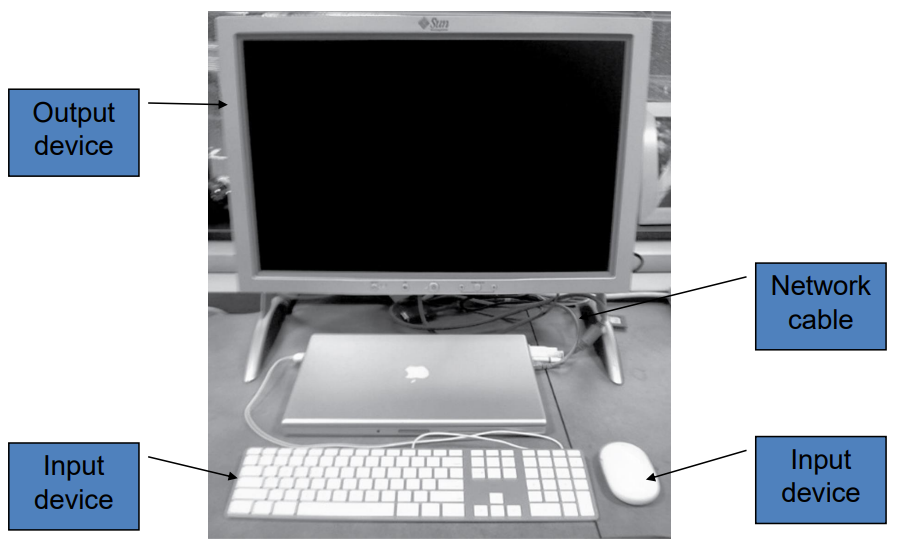
- 입/출력 (input/output)
- 사용자 인터페이스 : 모니터, 키보드, 마우스
- 저장 장치 : 하드 디스크, CD/DVD, flash 메모리
- 네트워크 : 다른 컴퓨터와 소통
- 메모리 (memory)
- 프로세서 (processor)
◆ Mouse & Monitor
- Optical mouse (광학 마우스) → Roller-boll 모델 대체
- LED 가 바닥면 비춤
- 작은 저해상도 카메라
- Basic image processor : x, y 움직임 감지
- 버튼, 휠
- LCD Screen
- frame buffer memory
- R, G, B (각 8 bit 할당) 로 색 만듬
◆ 컴퓨터 & 핸드폰 뜯어보기
-
컴퓨터
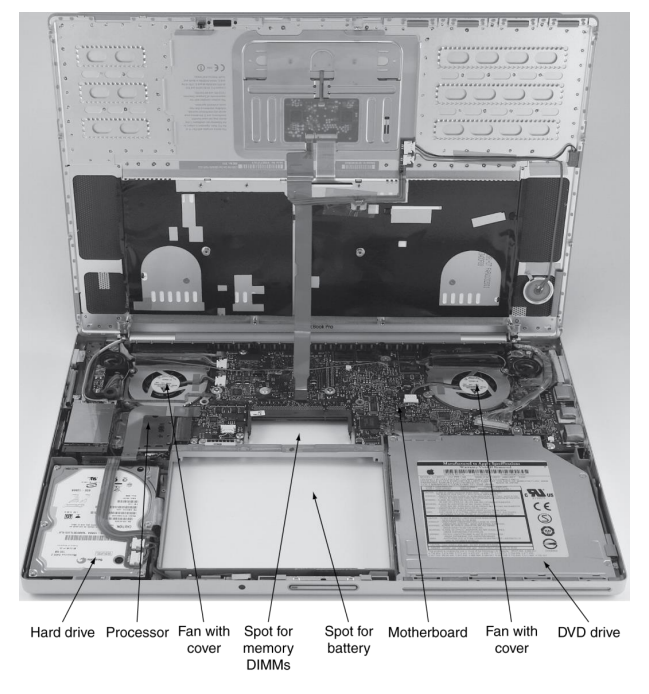
- Processor (CPU) : 열 발생
- Fan : CPU 에서 발생하는 열 식혀주는 쿨러 역할
- Motherboard (메인보드) : 컴퓨터 부품 연결 중앙 회로 기판
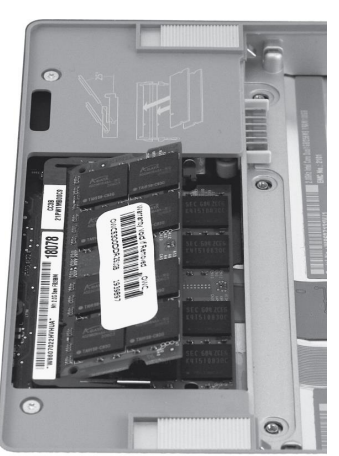
- Memory
-
스마트폰 (애플)
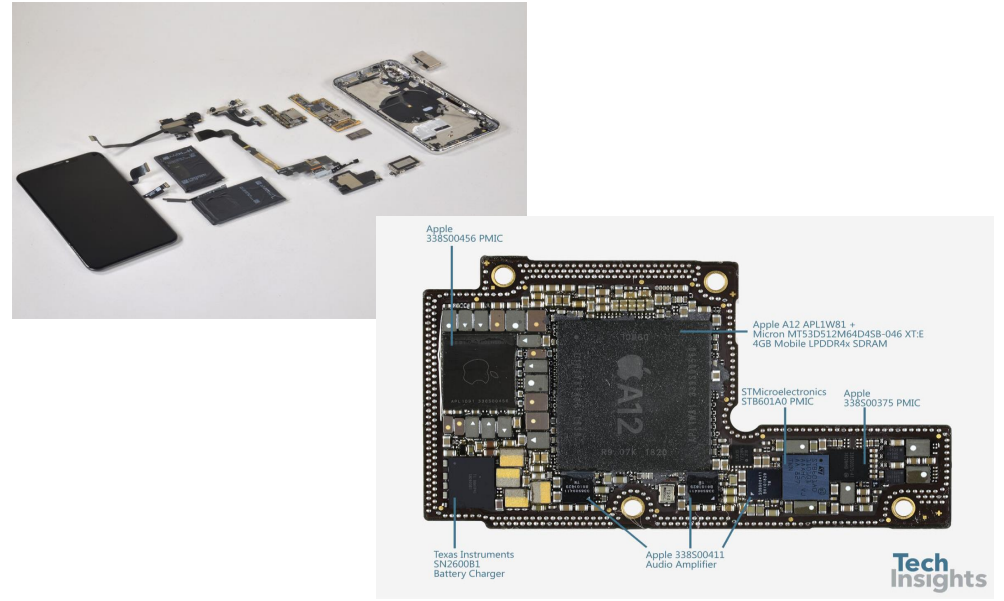
◆ CPU 의 구조
- Datapath : data operation 실행
- Control : datapath, memory 순서대로 제어
- Cache memory : 데이터 즉시 접근 위한 작고 빠른 SRAM 메모리
- example
-
AMD : 4 processor core
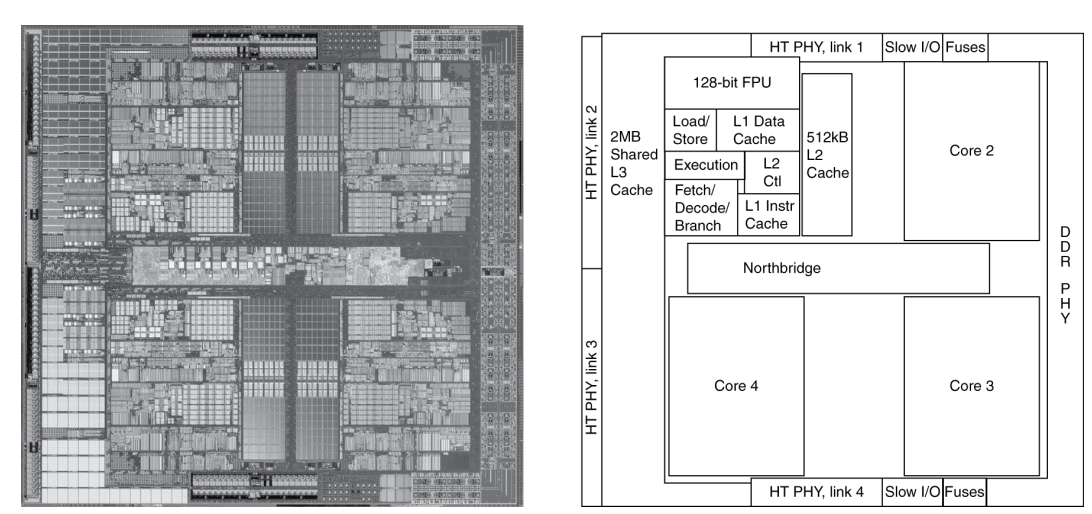
-
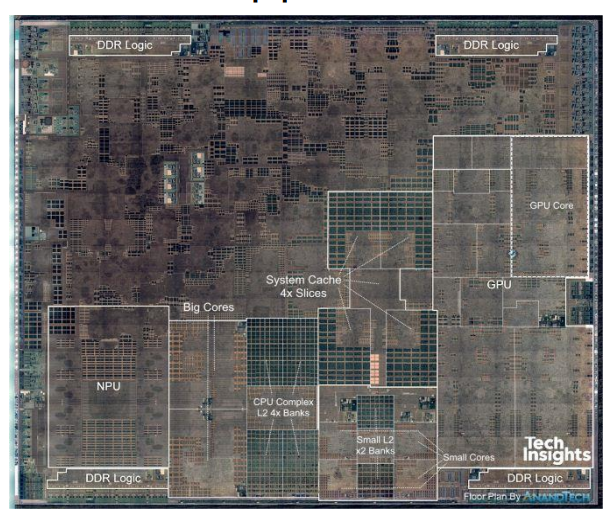
Apple A12 processor
-
→ 4개의 big core (CPU), GPU, NPU, cache 등으로 구성
- Abstraction : Hardware -Software Interface
- Instruction Set Architecture (ISA)
-
Assembly 언어에서 사용 가능한 명령어 종류 → 회사마다 ISA 다름 (Intel, ARM, MIPS)
-
ISA 가 다르면 CPU 구조도 다름
-
- Application Binary Interface (ABI)
- ISA + OS
- Instruction Set Architecture (ISA)
◆ Data 저장소
- Main memory (volatile) : instruction 이나 data 가 전원이 꺼지면 사라짐
- Secondary memory (non-volatile) : 전원이 꺼져도 사라지지 않음
- Magnatic disk
- Flash memory
- Optical disk (CDROM, DVD)
◆ Network
→ I/O device
- Communication & Resource sharing
- Local Area Network (LAN) : Ethernet
- Wide Area Network (WAN) : Internet
- Wireless network : WiFi, Bluetooth
✦ Technology Trend
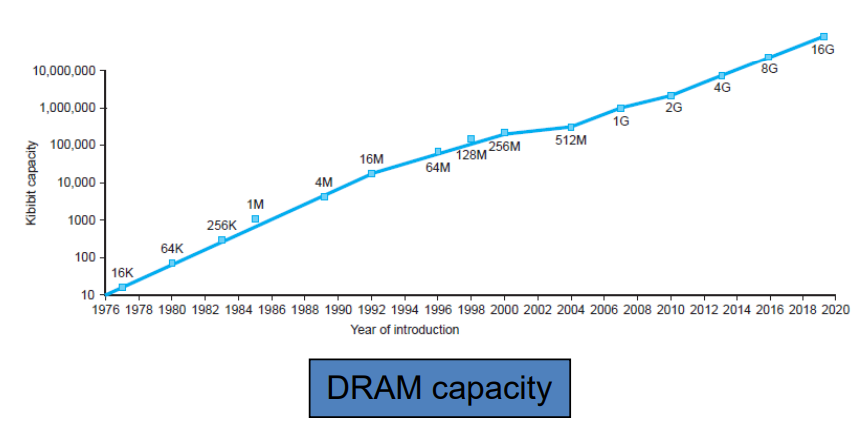
- DRAM capacity 의 증가
✦ Performance
◆ 성능은 분야마다 다르다
-
Algorithm : Big - O notation ex) O(m²) < O(n log n)
- 프로그래밍 언어 : Operation 실행에 필요한 machine instruction 수
- CPU & memory : instruction 실행 속도
- I/O system : I/O opreation 실행 속도
◆ CPU 성능 측정 기준
- Response Time (응답 시간) : 한 task 할 때 걸리는 시간
- Throughput : 단위 시간 동안 끝내는 task 수 → Response Time 감소하면 자동적으로 Thoughput 감소
→ Response Time 에 집중
◆ Measuring Execution Time
- Elapsed time : 전체 응답 시간
- CPU processing + OS + I/O 시간
- CPU time = Execution time
- CPU 를 사용한 실제 시간만 계산
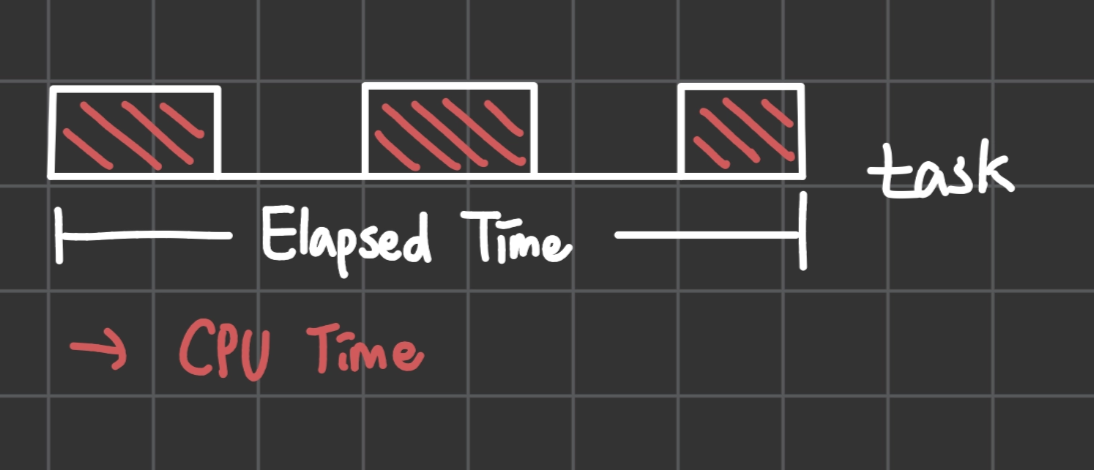
- CPU 를 사용한 실제 시간만 계산
◆ Relative Performance
→ Performance 와 Execution time 은 반비례
- Example
- 어떤 프로그램을 실행하는데 A 는 10s, B 는 15s 걸림 → A 는 B 보다 \frac{15}{10} = 1.5 배 빠름
◆ CPU Clocking
-
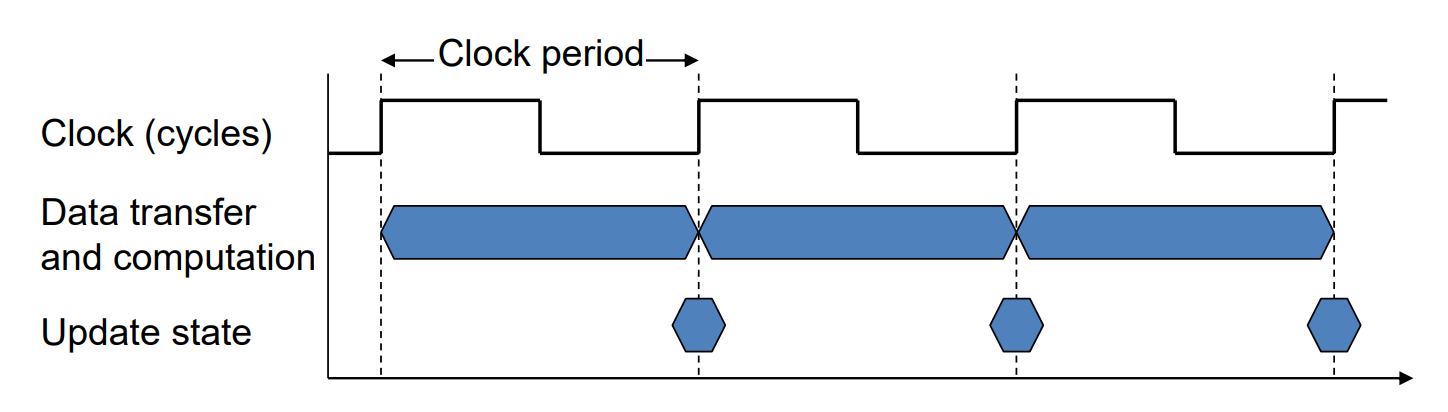
Clock period : 한 Clock cycle 에 걸리는 시간 ex) 250ps = 0.25ns = 250 \times 10^{-12}s
-
Clock rate (frequency) : 초당 Clock cycle 횟수 ex) 4.0 GHz = 4000MHz = 4.0 \times 10^9 Hz
◆ CPU Time
- Performance 줄이기 (CPU Time 줄이기)
- 실행 시 필요한 Clock Cycle 줄이기
- Code Optimization
- Clock Rate 늘리기 → CPU 성능 개선
- 실행 시 필요한 Clock Cycle 줄이기
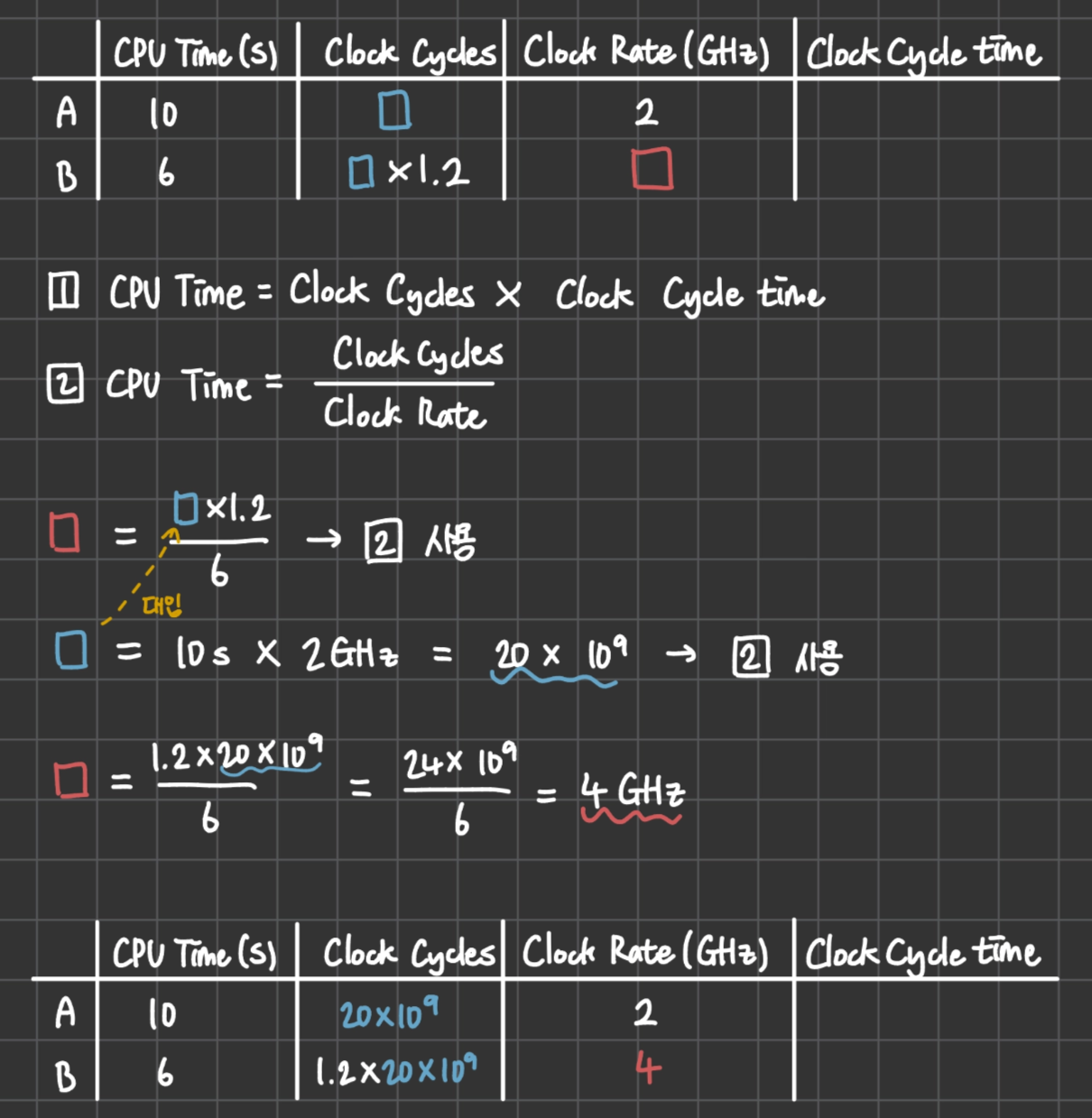
- Example
- A : 2 GHz clock, 10s CPU time
- B 를 만들고 싶음
- CPU time 6s 목표
- clock cycle × 1.2
◆ Instruction Count and CPI
-
Instruction Count : 명령어 갯수 → 프로그램, ISA, compiler 의해 결정
-
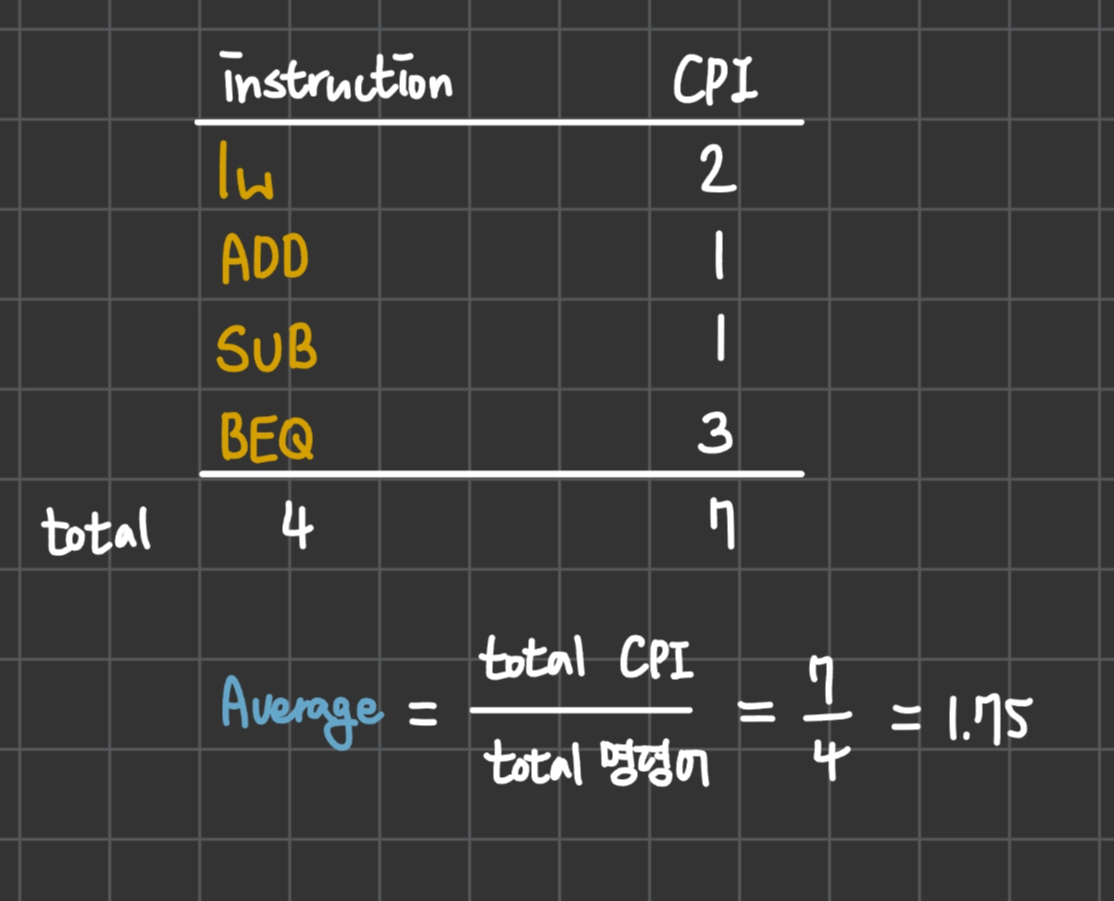
Cycles per Instruction (CPI) : 한 명령어 실행하는 데 필요한 cycle 수 → CPU hardware 의해 결정
- 명령어 마다 CPI 다를 수 있음 → 평균 CPI 사용 ex)
- Performance 높이기
- CPI 수 줄이기
- Instruction 수 줄이기
- 초당 Cycle 수 늘리기 (Clock Rate)
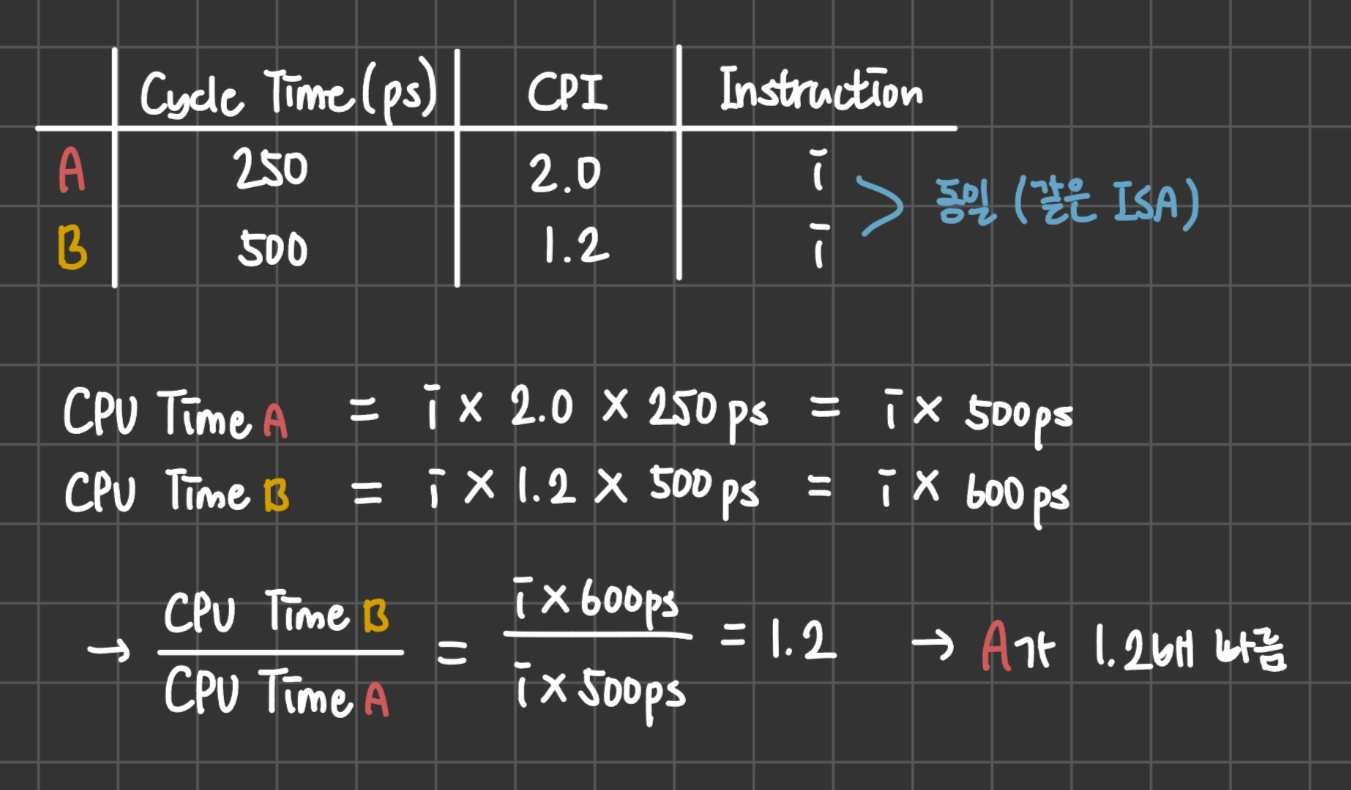
- Example 1
- A : Cycle Time = 250 ps, CPI = 2.0
- B : Cycle TIme = 500 ps, CPI = 1.2
- Same ISA (Assembly 언어, 즉 Instruction Count가 같음) → 어떤 컴퓨터가 더 빠른가?
-
Example 2
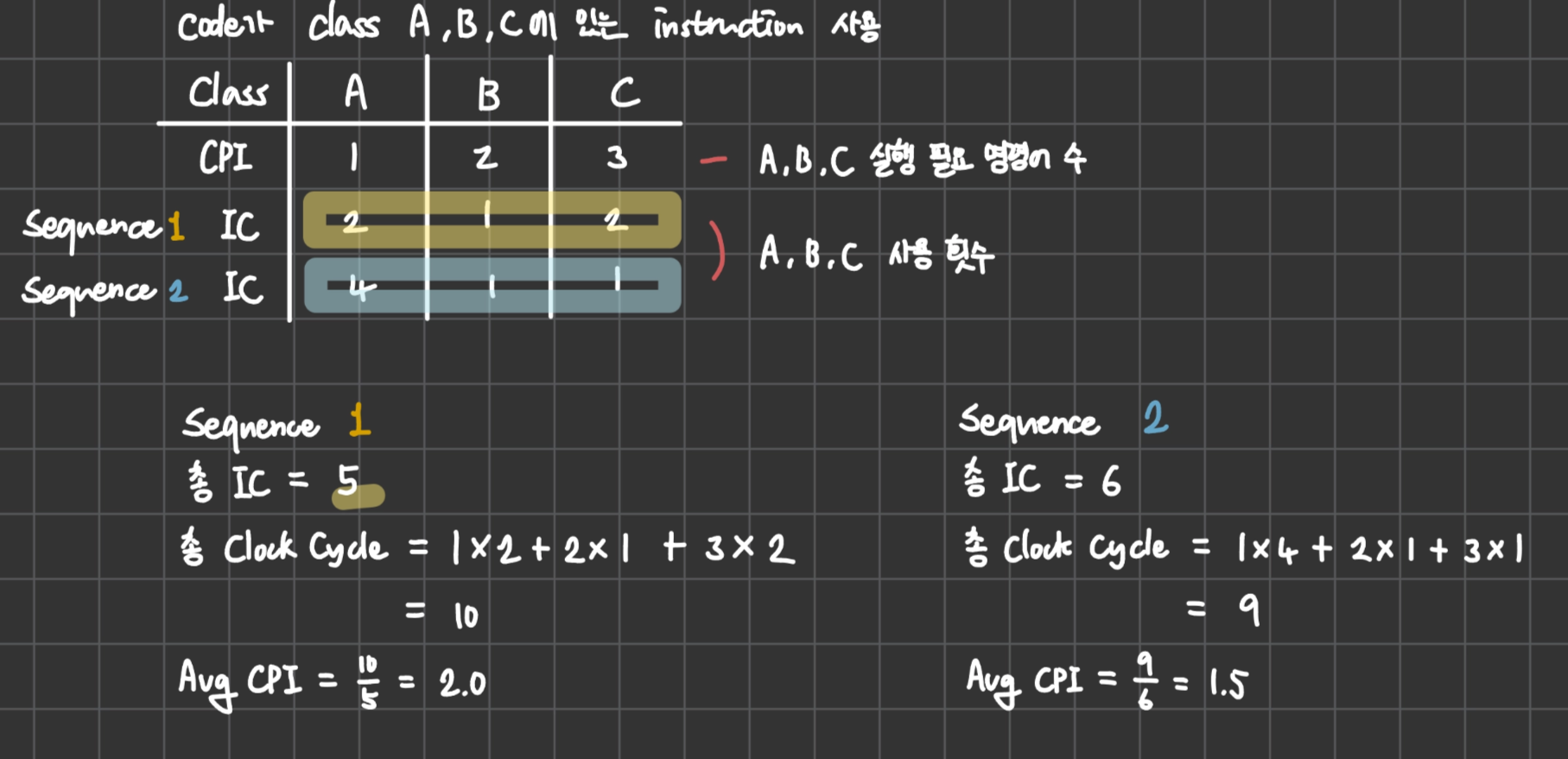
- Avg CPI 는 보통 floating point 값
-
총 Clock Cycle : Σ 각 명령어의 필요 IC 갯수 × Instruction 마다 걸리는 Cycle 수
- Weighted Avg.CPI (일반적 CPI)
→ 다른 Cycle 가진 명령어 마다 몇 번 사용하는지에 따라 다르게 계산
- 총 Execution Time : 어떤 두 가지 비교 위해서 사용
◆ Summary
- Performace 는 다음에 따라 변한다.
- Algorithm : IC. (CPI 에도 영향 미칠 수 있음)
- 프로그래밍 언어 : IC, CPI
- compiler : IC, CPI
- Instruction Set Architecture : IC, CPU, T{}_c
✦ Power
- P = P_{dynamic} + P_{static}
- dynamic power : 어떤 활동하면 늘어나는 power → 조절 대상!
- static power : 아무런 활동하지 않아도 사용하는 power
- tempurature (온도) 와도 관련 있음
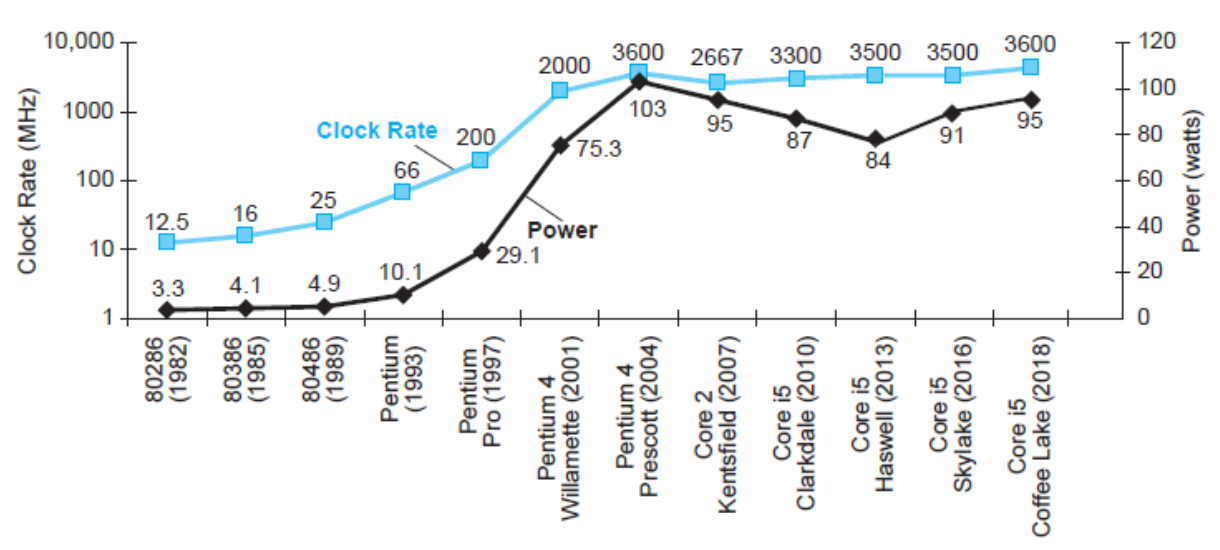
- Power Trend
◆ Dynamic Power
ex) Capacitive Load 기존의 85% Voltage, frequency 15% 감소
→ voltage, heat 줄이기의 한계 도달. how improve performance?
✦ Processor Core
◆ Uniprocessor
- processor 가 1개
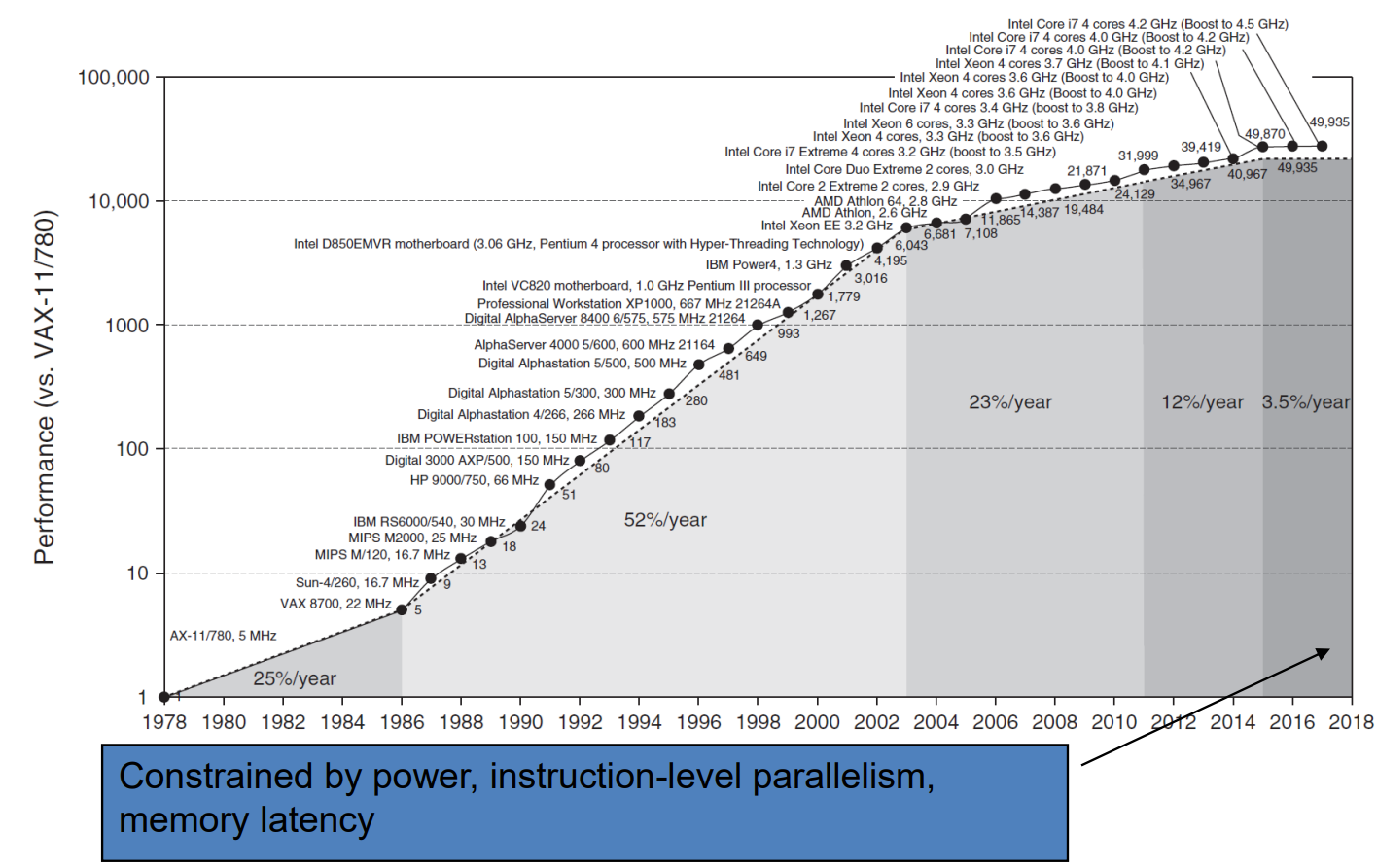
→ 점차 발전 속도의 느려짐
◆ Multiprocessor
- processor 여러 개 사용
✦ Chip
-
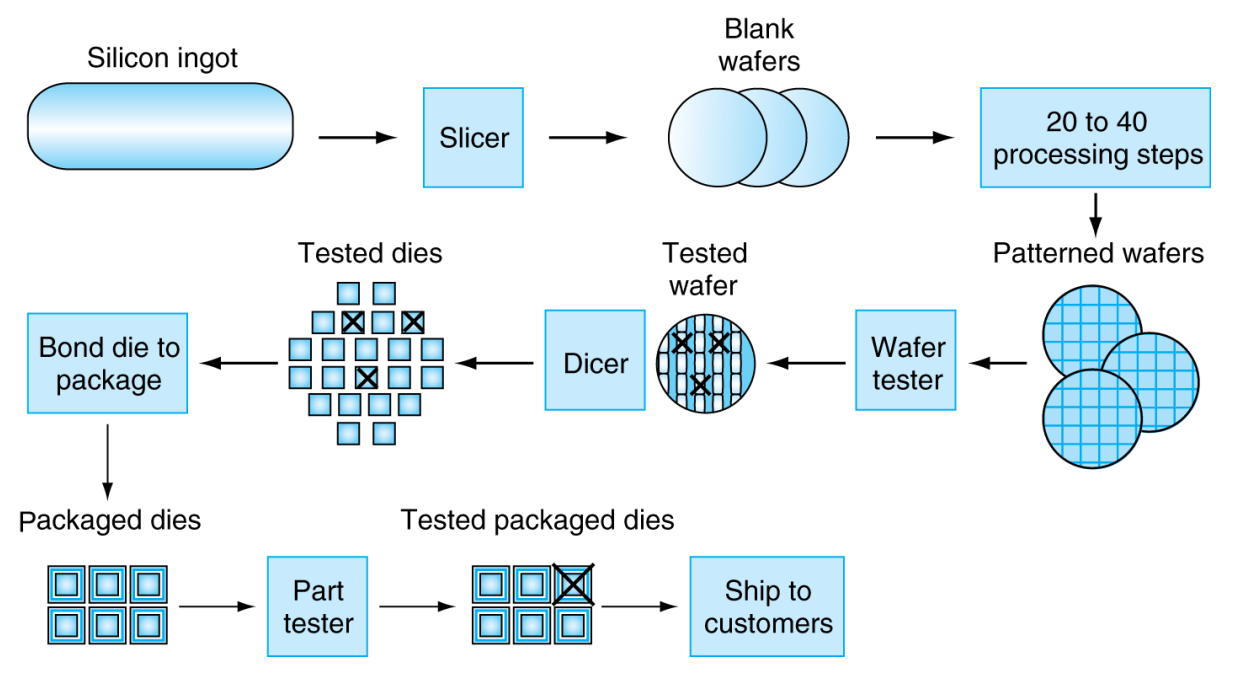
반도체 칩 만드는 과정
-
Yield (수율) : 한 wafer 에서 working 하는 die 의 비율
◆ Integrated Circuit Cost
- Chip 크기가 커지면 Yield 낮아짐.
✦ Benchmark
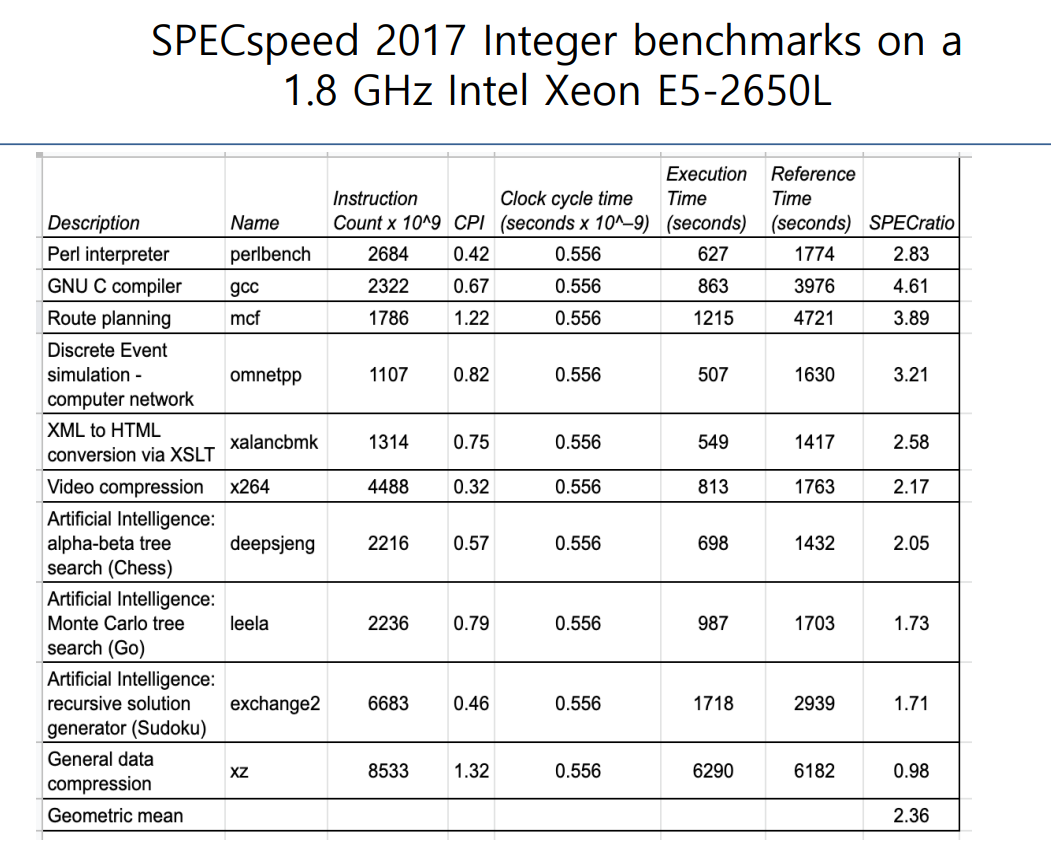
◆ SPEC CPU Benchmark
- CPU 성능 측정
- Standard Performance Evaluation (SPEC) 회사 제작
- SPEC CPU 2006 : 2006년에 개발된 벤치마크 프로그램
- I/O 없이 CPU 성능만 check (Elapsed time 체크)
- I/O 없이 CPU 성능만 check (Elapsed time 체크)
- performance ratio → geometric mean (기하 평균) 으로 구하기
- 특정 성능 높은 것보다 골고루 일정한 성능 나오는 게 더 어려움. 그걸 반영하기 위한 기하 평균
◆ SPEC Power Benchmark
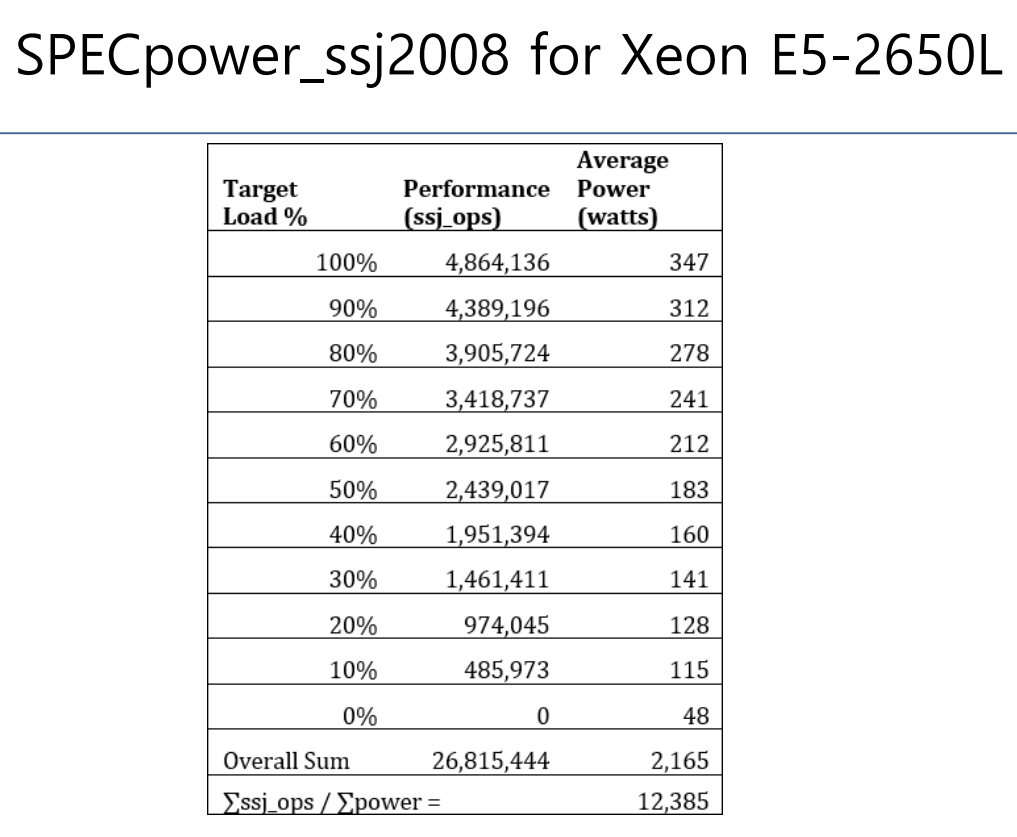
- 서버에서 다양한 부하 수준 (Target Load) 에서 전력 (watts) 대비 성능 (ssj_ops) 측정
- Performance : ssj_ops (server side Java operations) / sec. 서버가 1초 동안 처리한 작업 수
- Power : Watts
✦ Pitfall (함정) & Fallacy (오류)
◆ Pitfall : Amdahl’s law
- 프로그램에서 개선할 수 있는 부분 / 개선 불가능한 부분이 나눠져 있을 때, processor 수를 늘려도 성능 향상에 한계 생김
- 한계? Unaffected 부분
◆ Fallacy : Low Power at Idle
-
CPU 가 일을 거의 하지 않으면 전력 소모가 낮다 → 오류
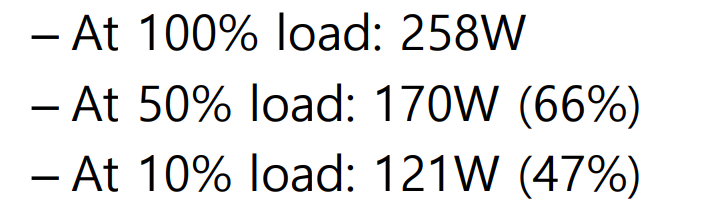
- 10% 와 50% 의 전력 소모는 비슷
- power 랑 load 는 비례하지 않는다
◆ Pitfall : MIPS as a Performance Metric
-
MIPS : 1초에 실행할 수 있는 명령어 수 → CPU 성능 비교 기준 X
- 같은 기능, 속도인데 명령어 분리해 MIPS 늘리는 꼼수 가능
-
MIPS 의 의미
- MIPS (metric) → 현재 주제
- MIPS (ISA 회사 이름) → Next Chapter
공유하기
Twitter Facebook LinkedIn글 이동

Comments